

Italian Garden in Podkarpacie
During the times of the Krasickis, on the eastern side of the castle there were gardens resembling an animal park. It was a type of garden that was simultaneously a hunting ground – its distinctive feature was the use and adaptation of the natural landscape.
In a later period, geometric gardens appeared near the castle. The term ‘Italian garden’ found in sources allows one to infer that these were gardens stylistically based on symmetry and the principle of imposing human-established order on nature – geometric rules were used for this purpose. A characteristic feature of such a garden was regularly arranged quarters separated by straight paths. Straight lines dominated it, intersecting at various angles to create different geometric patterns.

The park owes its current form to the Sapieha princes. In their times, the park's layout took on the characteristics of an English landscape park, which from the 18th century began to dominate European gardens. This is a style that breaks away from the artificiality and rigidity of geometric gardens. It is based on natural beauty – however, it is nature in an idealized, most beautiful, human-friendly form. Its essential elements are a park pond, extensive lawns, picturesque groups of trees. In the 19th century, gravel paths surrounded by shrubs began to be introduced into English-style gardens and trees brought from other continents as ‘botanical curiosities.’ Many such exotic species were also planted in the park by the Sapiehas. In the park, one can encounter trees and shrubs from North America (e.g., eastern white pine, chinkapin oak, tulip tree, swamp cypress) and Asia (e.g., ginkgo biloba, pea cypress, Amur cork tree, Japanese magnolia). According to local tradition, the Krasiczyn ginkgo biloba is endowed with magical properties – walking around it three times is said to ensure the fulfillment of a wish.

Living fossils among us
However, the park did not stop developing in later times. Some exotic species appeared in it after the war. Perhaps the most interesting example is the Chinese dawn redwood, growing near the bald cypress, to which it is externally very similar although they come from different continents and are not related at all. The Chinese dawn redwood is a living fossil – the only living representative of the dawn redwood genus. Initially, dawn redwoods were known only from fossils and the entire genus was considered extinct. Living specimens were discovered in China during World War II.
Trees with an extraordinary pedigree
The park also features interesting artificially cultivated varieties – for example, spruces with unusual shapes (nest variety, inverted variety). Here also grows an impressive London plane tree with characteristic peeling bark – a hybrid species, which originated from crossing the western plane (naturally found in North America) and the oriental plane (naturally found in Southeastern Europe and Asia Minor).
Sapieha family trees
Even in the 19th century, Prince Adam Stanisław Sapieha celebrated the birth of his children by planting trees for them in the castle park. When a girl was born, a linden tree was planted in the park – a symbol of sweetness, prosperity, and femininity. When a boy was born, an oak tree was planted – a symbol of strength and courage. This referred to ancient Slavic traditions. These family trees still grow in the park today. On the stone plaques placed near them, one can read the birth dates of the children and their names – Maria, Helena, Władysław, Leon, Paweł, Jan, and Adam.
Oak Adam – by a strange twist of fate growing near the Divine Tower housing the castle chapel – is a tree dedicated to Cardinal Adam Stefan Sapieha, who was born and raised in the Krasiczyn castle. He is recognized by historians as one of the leading figures in the history of the Polish Church in the first half of the 20th century. Due to his stance during the turbulent events of that period, he is called the Indomitable Prince.
Species richness of plants — an asset of Krasiczyn Park
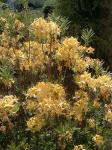
A shrub 1-2 m tall with a much greater diameter in older age. It forms root suckers. Young shoots, buds, and leaves are covered with glandular hairs causing stickiness. Deciduous leaves, inversely ovate to inversely lanceolate, 6 to 12 cm long, rough to the touch, densely covered with bristly hairs. Flowers are broadly funnel-shaped, about 5 cm in diameter, with a narrow corolla tube. Golden-yellow, sticky, intoxicatingly fragrant, they develop before or simultaneously with the leaves. A very decorative shrub, also due to the autumn carmine coloration of the leaves. The shrub is frost-resistant, tolerant of soil, forms thickets, all parts of the plant are poisonous.
Polish name: Pontic azalea
Latin name: Azalea pontica L.
Family: Ericaceae - heath family
Origin: Caucasus, islands of the Aegean Sea, southern Austria, Slovenia, Polesia, Podolia, border regions of Russia and Kazakhstan
Flowering period: from the end of April to the beginning of June
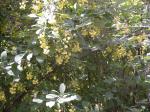
An upright shrub, 1.5 to 2 m tall. In winter, the shoots are reddish-brown, thorns very variable, at the base of long annual shoots leaf-shaped, higher up three-lobed, at the ends single. Leaves elliptical or obovate, rounded at the top, length: 7-9 cm, with a bristly serrated edge, stiff and leathery. Yellow flowers, gathered in clusters, strongly fragrant (pleasant or not depending on taste). Fruits more or less spherical, about 8 mm in diameter. A very decorative shrub with drooping branches and attractive bright red autumn leaf coloration. Resistant to frost and stem rust.
Polish name: Korean barberry
Latin name: Berberis koreana Palib.
Family: Berberidaceae - barberry family
Origin: Korean Peninsula
Flowering period: May-June
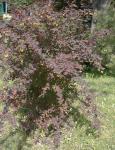
A shrub about 2 m high. Drooping shoots. Leaves elliptical or obovate, rounded at the tip, length: 7-9 cm, with a smooth leaf blade edge, slightly serrated at the tip of the long shoots, burgundy color, matte on top. Yellow flowers, gathered in clusters, strongly scented (pleasant or not, depending on taste). Fruits more or less spherical, about 8 mm in diameter, red. Resistant to frost and rust.
Polish name: Ottawa barberry
Latin name: Berberis x ottawensis C.K. Schneid.
Family: Berberidaceae - barberry family
Origin: hybrid
Flowering period: May-June

A low, wide shrub with a nice shape, branches arching downward toward the ground. Single thorns on the shoots. Small, inversely ovate, entire leaves, bright red, orange, or yellow in autumn. Yellow flowers, reddish on the outside, hang singly or in clusters of 2-5. Fruits - bead-like - elliptical, shiny, bright red, hang along the arching branches even until winter. Perfectly suited for landscaping slopes and inclines, creating low hedgerows. Resistant to rust. Not completely frost-resistant.
Polish name: Thunberg's Barberry
Latin name: Berberis thunbergii
Family: Berberidaceae - barberry family
Origin: Japan
Flowering period: May-June
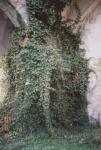
A self-climbing vine - it climbs supports up to 20 m with clinging roots that grow on the shaded side of the shoot. It produces two types of shoots: long clinging and short flowering (mature phase) protruding from the supports. The leaves are leathery, shiny, 4-10 cm long, varied: on sterile shoots 3-5 lobed, on flowering shoots rhomboid or ovate. The flowers are bisexual, 5-parted, small, greenish-yellow, gathered in terminal clusters, unpleasantly scented. The fruits are black drupes the size of a pea, ripening the next year. The plant creeps mainly on the ground in forests and parks, highly shade-loving, but requires light to flower, so it blooms high up on trees. A long-lived, evergreen vine, not completely frost resistant. Protected species. Poisonous plant.
Polish name: Common Ivy
Latin name: Hedera helix L.
Family: Araliaceae
Origin: Europe, northern Africa, western Asia
Flowering period: September - October
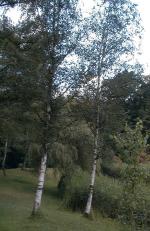
A tree up to 30 meters tall with a delicate crown shape due to thin, dangling shoots. Bark is thin, white, peeling in rings, thick, black, and cracked at the base of old trunks. Shoots covered with hard warts, rough, hairless. Leaves in groups of 2-3 on short shoots, triangular or diamond-shaped (3-7 cm long), doubly serrated, smooth or rough, youngest leaves sticky. The tree is very tolerant regarding soil and at the same time one of the most beautiful native trees, decorative at any time of the year.
Polish name: Warty birch
Latin name: Betula verrucosa Ehrh.
Family: Betulaceae - birch family
Origin: Europe and Asia, up to central Siberia
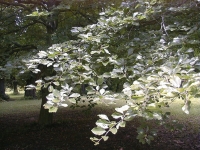
A tree with a beautiful shape, up to 30 m tall. The crown is dense and low-set. The bark is thin and smooth, ash-gray. The shoots are zigzag-shaped, the buds spindle-shaped, long and sharp, protruding, arranged alternately. The leaves are ovate or elliptical, almost entire, young ones with silky hairy petioles, older ones with long hairs only on the veins on the underside. In autumn, they turn yellow, orange to brown, and often remain on the tree until spring. The fruits, nuts, set in pairs in a four-valved woody fruit cover called beech nut or cupule. The tree requires fertile, fresh, clayey or clay-sandy soils, does not tolerate dry air, shade-loving. It does not withstand severe frosts and May frosts.
Polish name: Common beech
Latin name: Fagus sylvatica L.
Family: Fagaceae - beech family
Origin: Western, Central and Southern Europe, Caucasus
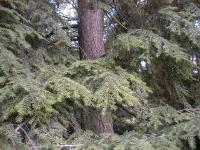
An evergreen, resinous tree up to 30 m high with a thin trunk and a wide conical crown with a delicate structure. The branches are long and thin, arranged irregularly, with the ends of the branches and the terminal shoot hanging down. Needles are very short from 3 to 18 mm - highly variable in length, flattened, widened at the bottom, narrowing towards the top. The underside of the needle has wide white stripes. Cones are very small, 1.5 to 2.5 cm long, oval, soft. Seeds with wings. The tree is not resistant to drought, heat, or frost. Shade-tolerant. In severe winters, it sheds some of the browned needles. The roots are shallow just below the soil surface, so it does not tolerate soil compaction around the trunk. It tolerates pruning well, making it suitable for hedges.
Polish name: Canadian hemlock
Latin name: Tsuga canadensis Carriere
Family: Pinaceae - pine family
Origin: eastern North America
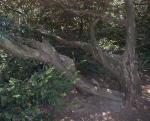
A tree about 15-20 m tall or a shrub, bark thin, reddish-brown, peeling off in flakes. Young shoots green 3-4 years old, brown. Needles flattened, 2-3 cm long, slightly curved and pointed, upper side darker and shiny, lower side light, yellowish. Flowers are dioecious, in the axils of needles on last year's shoots, inconspicuous. Fruits - brown (approx. 0.5 cm diameter) seeds in a red, fleshy aril. The whole plant is very poisonous (except for the aril, which has a faint sweet taste). Decorative are especially female yew specimens, mainly due to the red arils of the numerous seeds. The tree (shrub) is shade-tolerant, slow-growing, long-lived, and tolerates trimming well. The wood is hard, reddish-brown, excellent for marquetry.
Polish name: Common yew
Latin name: Taxus baccata L.
Family: Taxaceae - yew family
Origin: Central and Western Europe, northern Africa, southwestern Asia
Flowering period: March-April
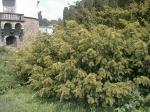
A variety with a bushy growth habit, golden-colored needles, side branches droop. The female maple - very decorative.
Polish name: English yew 'Dovastoniana Aurea'
Latin name: Taxus baccata L. 'Dovastoniana Aurea'
Family: Taxaceae - yew family
Origin: artificially bred variety
Flowering period: March-April
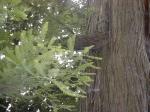
The tree reaches about 25 m in height in Poland (up to 50 m in its native land). The trunks are often swollen at the base. Characteristic are pneumatophores, stump-like outgrowths growing within a few meters of the plant, which serve as additional anchoring for the tree in marshy soil. The needles are seasonal, bright lush green during the growing season, reddish in autumn, falling off along with thin branches. Male flowers—long catkins, female flowers—single seated. Cones are small, 2-3 cm long. The tree is long-lived, but young specimens are sensitive to frost.
Polish name: Bald cypress
Latin name: Taxodium distichum Rich.
Family: Taxodiaceae - bald cypress family
Origin: swamps and floodplains along the Atlantic coast of the southeastern United States
Flowering period: March-April
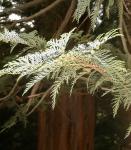
The tree in its native land grows up to 50 m tall. The leaves are small, claw-shaped scales, dark green and shiny, with a white pattern resembling a butterfly (bow) visible underneath. The cones are small, the size of a pea seed, hence the species name. The plant is frost-resistant in older age, but sensitive to dry, polluted urban air.
Polish name: Pea Cypress
Latin name: Chamaecyparis pisifera Endl.
Family: Cupressaceae - cypress family
Origin: Japan
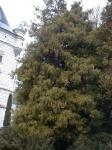
Broadly conical shape, grows slowly. Branches long and sparsely branched, thread-like, hanging scales colored golden. Old specimens growing in a good location, branched and dense from below, from a distance look like a haystack.
Polish name: Golden thread-like pea cypress
Latin name: Chamaecyparis pisifera 'Filifera Aurea'
Family: Cupressaceae - cypress family
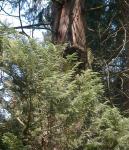
Tree-like growth, up to approx. 20 m tall, curly twigs with bent ends. Very short needles (3-4 mm long)
Polish name: Plumosa Sawara Cypress
Latin name: Chamaecyparis pisifera 'Plumosa'
Family: Cupressaceae - cypress family
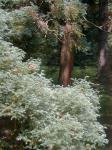
It grows tree-like up to approx. 20 m tall. Needles are needle-like, soft and delicate, 5-7 mm long with 2 whitish waxy bands underneath. Usually does not produce cones.
Polish name: Pea-leaved cypress, needle form
Latin name: Chamaecyparis pisifera 'Squarrosa'
Family: Cupressaceae - cypress family
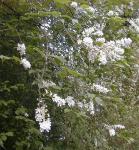
A tall shrub or tree up to 15 m high, with overhanging branches and bark that remains smooth for a long time. Produces root suckers. Shoots are quite thick, reddish-brown. Leaves are ovate-elliptical, pointed, 10-15 cm long, finely serrated, grayish and bluish-green underneath. Flowers are white, small, 1-1.5 cm in diameter, gathered in dense clusters, with an unpleasant smell. Fruits are in hanging clusters, spherical, 6-8 mm in diameter, turning black and shiny when ripe. A decorative shrub during flowering - a mass of white flowers. Frost resistant.
Polish name: Bird cherry
Latin name: Prunus padus L.
Family: Rosaceae
Origin: northwestern Africa, Europe, Caucasus, Far East
Flowering period: May
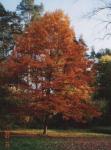
The tree grows up to 25 m in height. The bark is smooth. Leaves are lobed (3-5 pairs), lobes are sharply toothed. In autumn they turn flame-orange or red, in winter brown remain on the tree. Fruits: acorns - set in a shallow cup. The tree is frost-resistant and tolerant to air pollution.
Polish name: Red oak
Latin name: Quercus rubra L.
Family: Fagaceae - beech family
Origin: Eastern North America
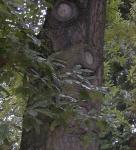
The tree reaches 20-30 m in height. Leaves are entire, broad-lanceolate, pointed or blunt at the end, up to 15 cm long, woolly underneath. Young leaves are yellowish-green, shiny reddish-brown in autumn, and remain on the tree until spring. Fruits - small, fine acorns, do not mature in our climate.
Polish name: Shingle Oak (imbricate oak)
Latin name: Quercus imbricaria Michx.
Family: Fagaceae - beech family
Origin: Central and southeastern regions of North America
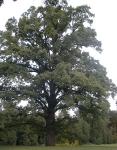
A long-living, slow-growing tree reaching up to 40 m in height and 2-3 m trunk diameter, with a spreading crown and massive lateral branches. The bark of the trunk is deeply cracked, leaves range from 5 cm to 10 - 15 cm, lobed - from 3 to 6 pairs. Fruits - acorns up to 3.5 cm - several on a long stalk. Acorns are a delicacy for many animals, both mammals and birds. Oak wood is highly valued in carpentry, furniture making, etc. Oak tolerates cutting and trimming well, and can be used for shaped hedges and alleys.
Polish name: Pedunculate oak
Latin name: Quercus robur L.
Family: Fagaceae - beech family
Origin: Europe, southern-western Asia
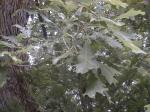
The tree reaches 25-30 m in height. Leaves vary from 15 to over 30 cm in length with 5-7 lobes, deeply indented after the second or third pair of lobes. Fruits appear singly on twigs, acorns half or more deeply hidden in cups. The scales on the cup are elongated and protruding. Fruits on the specimen in Krasiczyn do not ripen.
Polish name: Bur oak
Latin name: Quercus macrocarpa Michx.
Family: Fagaceae - beech family
Origin: North America
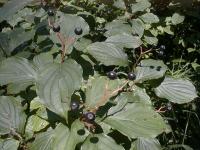
A shrub, sometimes a tree, up to 7-10 m tall; branches arch downward and take root. It often produces root suckers. Shoots reddish-brown on the sun-exposed side, less or more green in the shade, buds covered with scales. Leaves broadly ovate usually with 3-4 pairs of nerves, green and hairy on both sides. Flowers creamy-white, small, gathered in umbels at the ends of leafy shoots. Fruits are garnet or garnet-black about 6 mm in diameter, ripening in October. A shrub growing wild in almost any soil, with beautiful dark burgundy discoloration of leaves after the first frosts.
Polish name: Cornelian cherry
Latin name: Cornus sanguinea L.
Family: Cornaceae - dogwood family
Origin: Europe
Flowering period: May-June
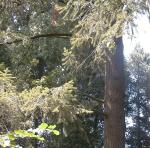
One of the tallest trees in the homeland, in Poland it reaches a height of 35 m, fast-growing. The tree's habit is similar to a spruce. The bark of old individuals is thick and cracked. Buds without resin, sharply pointed, long (up to 1 cm long) brown and shiny. Needles green, flattened, length from 2 to 4.5 cm, with two white stripes underneath, slightly pointed at the end. Monoecious flowers, cones with characteristic long three-toothed scales, hanging. Seeds usually fall out in early autumn, only then do the cones fall.
Polish name: Douglas fir
Latin name: Pseudotsuga menziesii Franco
Family: Pinaceae
Origin: Along the Pacific Ocean coasts, from southwestern Canada to northern California
Flowering period: April
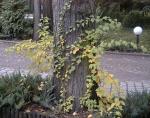
A vigorously growing vine reaching several meters in height. The leaves are roundish or broadly obovate, 5-10 cm long, shortly pointed at the tip, light green. The flowers are inconspicuous, small, arranged in panicles. The fruits are spherical yellow capsules (6-8 mm in diameter) containing seeds inside red-orange arils. The plant is dioecious (with male and female plants), therefore, to achieve a mass fruiting effect, both plants should be planted in autumn. The Celastrus is frost-resistant and tolerant of soil and light conditions. The plant is poisonous.
Polish name: Oriental Bittersweet
Latin name: Celastrus orbiculatus Thunb.
Family: Celastraceae - bittersweet family
Origin: Far East - Northeastern China, Korean Peninsula, Japan
Flowering period: late May - early June
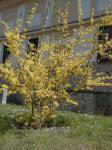
A spreading shrub up to 3 m high. Leaves are narrow-ovate or lanceolate, 8-12 cm long, serrated from the middle of the blade. Sometimes lobed or 3-part. Flowers are usually numerous, appearing before the leaves with open petals, often twisted and with a rolled edge. The most decorative is the early shrub giving the effect of a yellow patch. In autumn, the leaves turn purple-brown. Not very frost-resistant, which in some years results in poor flowering or no flowering at all.
Polish name: Forsythia x intermedia
Latin name: Forsythia x intermedia
Family: Oleaceae - olive family
Origin: hybrid (the original form comes from China)
Flowering period: late April - early May
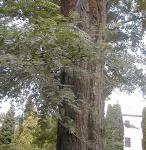
The tree in its native land grows up to 45 m high, with a specimen in Krasiczyn reaching 26 m. The crown is light and airy thanks to the small compound leaves. Leaves are up to 20 cm long, pinnately compound with pairs of leaflets (20-30 leaflets) or bipinnately compound, measuring from 1.5 to 4.5 cm long. Flowers are radial, 3-5-parted, yellow-green, very nectar-producing, polygamous-dioecious (there may be non-fruiting trees - the specimen in Krasiczyn does not bear fruit). Fruits are long (up to 40 cm long) flat pods, reddish-brown and shiny. Very decorative. They remain on the tree until spring. The tree is frost-resistant when mature, tolerates pruning, so it can be used for clipped hedges.
Polish name: Honey locust
Latin name: Gleditsia triacanthos L.
Family: Leguminosae - legumes
Origin: Central and eastern regions of the USA
Flowering period: June
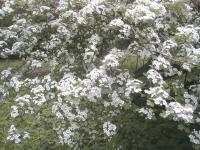
A tall shrub or tree up to 10 m high, thorns up to 2 cm long. Leaves pinnately lobed or pinnately dissected with 3-7 lobes, entire or slightly serrated. White flowers gathered in umbels, unpleasantly scented, spherical red fruits with 1 seed. The plant is often used for hedgerow plantings.
Polish name: Common hawthorn
Latin name: Crataegus monogyna Jacq.
Family: Rosaceae - rose family
Origin: Europe, North Africa, Southwest Asia
Flowering period: May-June
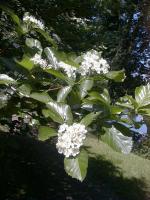
A small tree up to about 7 m tall. Thorns up to 5 cm long, often absent, various parts of the plant hairy. Leaves elongated-elliptical or narrowly obovate up to 12 cm long, serrated with narrow cuneate bases, stiff, leathery, dark green and shiny on the upper side, hairy underneath. White flowers gathered in umbels. Fruits ellipsoidal up to 1.5 cm long, yellow-orange or brick red, late ripening. Autumn leaf coloration is very decorative - brownish red. The tree is not fully frost-resistant.
Polish name: Lavalle's hawthorn 'Carrierei'
Latin name: Crataegus x lavallei 'Carrierei'
Family: Rosaceae
Origin: hybrid obtained in the 19th century in France
Flowering period: late May - June
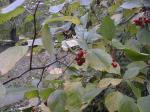
A tall shrub, lower branches hang down to the ground. Shoots shiny reddish-brown, thorns long: 6-8 cm. Leaves inversely ovate or elliptical, serrated, dark green and shiny, yellow, orange and red in autumn. Flowers in multi-flowered inflorescences, white with reddish anthers. Fruits spherical approx. 1 cm in diameter, red. Especially suitable for natural defensive hedges.
Polish name: Plum-leaved hawthorn (formerly spurred hawthorn)
Latin name: Crataegus persimilis 'Splendens' (formerly c. crus-galli)
Family: Rosaceae
Origin: Northeastern North America
Flowering period: May-June
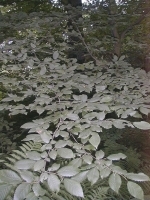
A tree 20-30 m tall with a low-set crown. Bark smooth, dark ash-gray. Leaves elliptical or narrow-ovate up to 10 cm long, with sharply doubly serrated edges. Fruits - nuts with three-lobed wings, gathered in hanging fruit clusters. Prefers fertile humus and clay-sandy soils. The most shade-tolerant species among native deciduous trees. Tolerates pruning well. The most beautiful for clipped deciduous hedges.
Polish name: Common Hornbeam
Latin name: Carpinus betulus L.
Family: Corylaceae - Hazel family
Origin: Europe
Flowering period: late April - early May
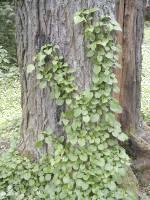
A climbing vine that climbs using adventitious roots. The bark of the branches peels off in a papery manner. Leaves are broadly ovate or rounded, up to 10 cm long, often sharply toothed, hairless, dark green and shiny on the upper side. Flowers in loose, flat and wide inflorescences of two types: fertile - with fused corolla petals, and sterile - white, 3-3.5 cm in size, appearing on the edges of the inflorescence. A plant whose use is similar to ivy but more decorative due to its flowering. Climbing hydrangea is frost-resistant. It tolerates even heavy shade (though it will not bloom then), must grow on supports with a rough surface, and can also be planted singly on lawns to cover shaded areas.
Polish name: Climbing Hydrangea
Latin name: Hydrangea petiolaris Siebold et Zucc.
Family: Hydrangeaceae - hydrangeas
Origin: Far East
Flowering period: late May - June - July
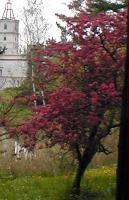
A small tree, decorative mainly because of its flowers. The flowers are single, purple, blooming simultaneously, which creates a beautiful effect during the flowering period. Fruits are small, up to 2.5 cm in diameter, on long stalks. The tree is sensitive to diseases.
Polish name: Purple apple tree
Latin name: Malus x purpurea
Family: Rosaceae
Origin: hybrid
Flowering period: late April - May
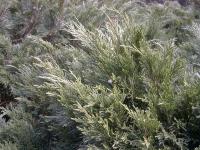
A low and widely spreading shrub up to 1.5 m high with creeping branches that take root. Leaves are small scales forming cylindrical shoots; needles mainly occur on young plants, are short, up to 4 mm long, arranged crosswise. When crushed, they emit an unpleasant smell (sabinol); the whole plant is highly poisonous.
Polish name: Juniperus sabina
Latin name: Juniperus sabina L.
Family: Cupressaceae - cypress family
Origin: Mountains of southern and central Europe, southern - western Asia, Siberia, China, Mongolia
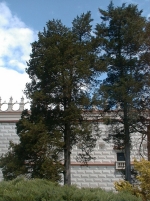
A tree reaching 15 to even 40 meters in height in its homeland. Reddish-brown bark, needles and scales on shoots, shoots with scales are very thin, slightly four-angled in cross-section. Crushed needles have an aromatic scent. It has average soil requirements. It is frost-resistant.
Polish name: Eastern Red Cedar
Latin name: Juniperus virginiana L.
Family: Cupressaceae - cypress family
Origin: eastern North America
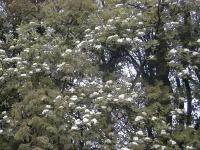
A tree up to 15 m tall or a tall, multi-stemmed shrub. The crown is oval or rounded. Leaves are simple, usually elliptical, 8-12 cm long, sharply, sometimes doubly serrated (young leaves on both sides, older ones only underneath), covered with a felt-like down, giving the leaves a silvery-white appearance. Flowers are white, about 1 cm in diameter, gathered in small umbels. Fruits are few in number, spherical or elliptical (1-1.5 cm), orange or red with mealy flesh. A very decorative tree due to its silvery foliage during leaf development in May. It forms a regular, nice crown. Drought-resistant, light-loving, suitable for calcareous soils.
Polish name: Sorbus aria
Latin name: Sorbus aria Crantz.
Family: Rosaceae - rose family
Origin: Southern and Central Europe, Northeast Africa
Flowering period: May-June
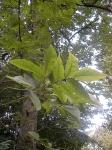
A tree growing up to 20 m tall with a wide crown and drooping lower branches. Leaves are odd-pinnate compound with 5 to 9 ovate, pointed leaflets on both sides. They turn yellow very early in autumn. Fruits are 3-5 cm sized nuts equipped with a long narrow wing.
Polish name: Green Ash
Latin name: Fraxinus pennsylvanica Marshall
Family: Oleaceae - olive family
Origin: Eastern North America
Flowering period: April - May
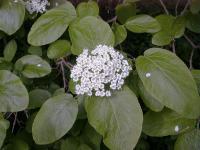
A shrub up to 2-3 m high, with numerous root suckers, arching shoots that hang and take root. Shoots, leaves, and other parts of the plant are covered with dense woolly hair. Leaves are ovate-elliptical, 5-12 cm long, densely finely serrated, quite thick, mature ones nearly bare and wrinkled on the upper side, usually covered with dense woolly hair underneath. Flowers 6-8 mm in diameter, whitish with a faint scent, gathered in inflorescences - cymes 5-10 cm in diameter at the tops of lateral shoots and several-year-old long shoots. Fruits are ovate (approx. 8 mm long), initially red, fully ripe black and shiny, ripening from July to September. Viburnum is perfectly suited for dry but fertile soils and should be planted in sunny places, where it blooms more abundantly, has a nicer shape, and beautiful brown leaf discoloration.
Polish name: Wayfaring tree
Latin name: Viburnum lantana L.
Family: Caprifoliaceae - honeysuckle family
Origin: Southern and Central Europe, Northwest Africa, Southwest Asia
Flowering period: late April - May
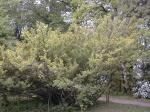
A tall, sprawling shrub with stiff, upright branches. The short shoots are numerous, thick, elongating with age, the long shoots are green, older ones have fibrous peeling bark, some of the sharp stipules turn into thorns. Leaves are compound, usually with 8-12 elliptical or oblong leaflets, up to 2.5 cm long, light green in color. Yellow flowers appear in groups on short shoots, 1.5 - 2 cm long, honey-producing. Fruits are narrow cylindrical pods up to 5-6 cm long, which burst open with a snap on hot July and August days. A beautiful shrub introducing a bright accent in greenery, used in parks, also suitable for clipped hedges. Fully resistant to frost and drought.
Polish name: Siberian peashrub
Latin name: Caragana arborescens Lam.
Family: Leguminosae
Origin: Western Siberia, Altai, Sayan Mountains, Mongolia
Flowering period: May - early June
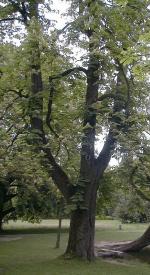
A tree growing up to over 25 m in height. The crown is elongated and rounded. The lower branches are usually long and drooping. The bark of old trees peels off in longitudinal plates, usually arranged spirally. The shoots are thick, buds large up to 2.5 cm long, dark brown and sticky. Developing young shoots, leaves, and inflorescences are densely rusty hairy. The leaves are palmate compound with 5-7 sessile leaflets. The leaflets are large, up to 25 cm long, obovate, wedge-shaped at the base, with a serrated edge. The flowers are white gathered in conical panicles 20-30 cm long. The fruits are spiny, thick-walled capsules (up to 6 cm in diameter), usually with three brown seeds maturing in September - October. The tree is very decorative throughout the growing season and should be planted in moist soils. It is frost resistant. A medicinal and melliferous plant. Not recommended for cities due to street littering by fruit husks. The fruits are rich in starch - food for forest wildlife. The tree is increasingly attacked by the horse-chestnut leaf miner insect, which causes leaf necrosis in the middle of the growing season; the plant defends itself by producing new leaves, weakening the entire organism. The insect migrated from the Balkans.
Polish name: White horse-chestnut
Latin name: Aesculus hippocastanum L.
Family: Hippocastanaceae - horse-chestnut family
Origin: Balkans
Flowering period: May
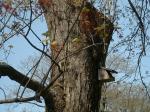
A tree up to 20 m tall, leaves 10-12 cm long, three-lobed, indentations between lobes sharp, edge serrated, underside bluish. Flowers red, bloom before leaf development. Seeds: samaras - before ripening are bright red. Leaves in our park turn red only at the moment of falling, therefore there is no decorative effect of red leaf coloration on the tree. Frost resistant, but the tree is not long-lived. Our specimen leans, so the crown was relieved by removing one of the branches on the leaning side. Can be propagated from seeds.
Polish name: Red maple
Latin name: Acer rubrum L.
Family: Aceraceae - maples
Origin: E. North America
Flowering period: April - early May
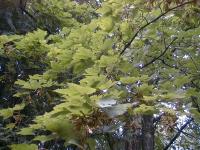
The tree reaches up to 35 meters in height. Leaves are 3-5 lobed, with a serrated and floral edge, and the indentations between the lobes are sharp. Leaves are bluish underneath and turn yellow in autumn. Flowers are in elongated, racemose, pendulous multi-flowered panicles at the tips of the current year's growth. Fruits: samaras - wings positioned at an acute angle or parallel.
Polish name: Sycamore maple
Latin name: Acer pseudoplatanus L.
Family: Aceraceae - maples
Origin: Central and Southern Europe
Flowering period: May
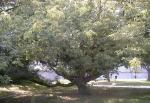
A tree reaching 10-15 m in height, often with several trunks or low branching. Trunks usually crooked, covered with galls, branches long, often drooping. Shoots bare, green or purple, covered with a waxy bloom when young. Leaves compound (from 3 to 9 leaflets). Leaflets up to 10 cm long, ovate, pointed at the tip, coarsely toothed, lobed. Flowers dioecious, greenish-yellow, female in long hanging clusters, male in multi-flowered bunches. Fruits - elongated nuts with overlapping nuts. They ripen in September and remain on the tree until spring. Leaves are bright green, turning pale yellow in autumn. Tolerant of soil and light, resistant to drought and frost. Often forms picturesque wide crowns. Spreads very easily and is a nuisance; additionally, it produces numerous suckers at the base of the trunk, so it requires maintenance. Completely unsuitable for planting along streets.
Polish name: Box elder maple
Latin name: Acer negundo L.
Family: Aceraceae - maples
Origin: North and Central America
Flowering period: March - April
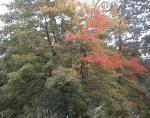
Tree up to 30 m high. Bark dark gray, with vertical shallow cracks. Buds reddish-brown. Leaves 5-lobed, usually 10-20 cm in diameter, lobes pointed, indentations between lobes arch-rounded. Slightly shiny underneath with tufts of hairs in the vein angles. Petioles with milky sap. Flowers unisexual, monoecious, greenish-yellow, about 1 cm in diameter in terminal corymbs. Fruits - wings widely spread, mature in September - October. The most common maple in Poland. The most beautiful autumn leaf coloration: yellow, orange, red, beet-red. Nectar-bearing flowers.
Polish name: Norway maple
Latin name: Acer platanoides L.
Family: Aceraceae - maples
Origin: Europe, southwestern Asia
Flowering period: April - early May
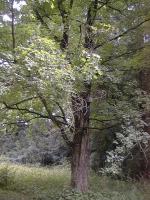
A tall shrub or tree up to 10 m high. The crown is dense, rounded. Leaves are 3-5 lobed, small, 5-10 cm in diameter, with entire or lobed margins. In autumn, the leaves turn bright yellow. Flowers are unisexual, greenish-yellow. Fruits are pairs of nuts equipped with wings spread more or less horizontally. The tree is drought and frost resistant, shade tolerant. Flowers are nectar-producing.
Polish name: Field Maple
Latin name: Acer campestre L.
Family: Aceraceae - maples
Origin: Europe, northern - western Africa, southern - western Asia
Flowering period: late May - early June
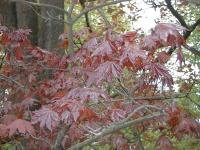
A tree up to 30 m high, leaves 5-lobed, usually 10-20 cm in diameter, lobes with elongated sharp ends, indentations between lobes rounded. The youngest leaves are bright red, by the end of May or beginning of June they turn brownish, in mid-summer seemingly wilted - with the edge of the leaf blade curled downward and almost green, except for the red petioles and veins. Inflorescences red - crowns of flowering trees reddish-brown.
Polish name: Common maple Schwedler variety
Latin name: Acer platanoides 'Schwedleri'
Family: Aceraceae - the maple family
Flowering period: April - early May
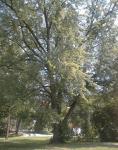
The tree in Poland grows up to 25 m in height, with a wide, spreading, open crown, and hanging lateral branches. The bark is ash-gray, smooth when young. The leaves are deeply lobed, 8-15 cm in diameter, sharply serrated, the middle lobes folded at the edges, pointed at the top, white underneath. The flowers are inconspicuous, greenish, usually dioecious. The fruits are asymmetrical samaras - only one is well developed. They appear from the end of May to early June. The leaves have a nice yellow autumn coloration. The tree is planted as a solitary specimen, needs a lot of space, and is not suitable for planting near streets.
Polish name: Silver maple
Latin name: Acer saccharinum L.
Family: Aceraceae - maples
Origin: Eastern part of North America
Flowering period: late March - April
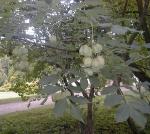
A shrub growing up to 2-4 m in height. The bark is smooth with white vertical stripes. Leaves are compound, narrow-oval, finely serrated. Flowers are white, small, in clusters, with the scent of lightly pickled cucumbers, honey-bearing. Very decorative fruits: inflated 2-3 chambered pods with very hard, light brown seeds inside. Very hard wood, once widely used for the production of small household items. The shrub is protected under species conservation.
Polish name: Southern bladdernut
Latin name: Staphylea pinnata L.
Family: Staphyleaceae - bladdernut family
Origin: Central and Southern Europe
Flowering period: May - June
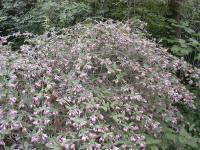
A shrub up to 3 m tall with arching curved branches. The bark is gray-brown, peeling in fringed flakes. Leaves are opposite, ovate, 3-7 cm long, entire or slightly finely serrated, hairy on both sides. Flowers are pentamerous, with a calyx fused into a long narrow tube, with five sepals at the top. The corolla is bell-shaped, pink with a yellow spot in the throat. Flowers are grouped in panicle-like inflorescences. This shrub is very decorative due to abundant flowering; it should be planted in sunny locations, but it is not fully frost-resistant.
Polish name: Kolkwitzia amabilis
Latin name: Kolkwitzia amabilis Graebn.
Family: Caprifoliaceae - honeysuckle family
Origin: Mountains of central China
Flowering period: late May - June
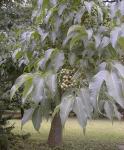
The tree grows up to 15 m in height. The bark is deeply cracked, thick, soft (it bends under pressure). The leaves are lanceolate or ovate, pointed, composed of 3 to even 15 leaflets. The flowers are inconspicuous, greenish. The fruits are round (up to 1 cm in diameter), black drupes. Trees often have a decorative shape and beautiful autumn leaf coloration (vivid yellow).
Latin name: Phellodendron amurense Rupr.
Family: Rutaceae
Origin: Northern China, Manchuria, Korean Peninsula
Flowering period: May/June
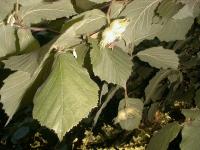
A shrub up to 5-6 m tall, with widely spreading branches. Leaves are obovate, 10-13 cm long, heart-shaped at the base, shortly pointed with a serrated and often slightly dentate edge, softly hairy. Fruits - nuts - up to 2 cm long in leaf-like husks, borne singly. It bears fruit abundantly every 2-3 years. Seeds are rich in valuable, easily absorbable fats. The plant is a good source of nectar. It is suitable for sunny or partially shaded locations, and even shaded ones, although fruiting is then weaker.
Polish name: Common Hazel
Latin name: Corylus avellana L.
Family: Corylaceae - hazel family
Origin: Southern Europe - Western Asia
Flowering period: February - March - April
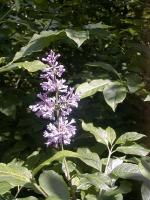
A shrub with stiff upright branches growing 3-4 m tall. Young shoots are hairy. Leaves are broadly elliptical, 6 to 12 cm long, hairy on the veins, dark green on the upper side, grayish-green or whitish underneath. Flowers are lilac-purple with a corolla tube 7-11 mm long, gathered in narrow, fairly dense, upright panicles 10-18 cm long. The flowers are slightly fragrant. The shrub is excellent for park plantings, spreads through runners, and late blooming gives a color effect when common lilacs have long since finished flowering. The shrub is frost-resistant and prefers moist soils.
Polish name: Josika lilac (Hungarian)
Latin name: Syringa josikaea J.Racq. ex Rchb.
Family: Oleaceae - olive family
Origin: Eastern Carpathians and Transylvanian Plateau
Flowering period: June
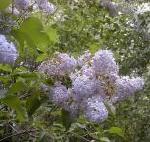
A shrub or small tree up to 7 meters tall. Shoots branch pseudo-dichotomously. Leaves are ovate, with heart-shaped petioles, ranging from 5 to 12 cm in length. Flowers have a narrow, long corolla tube (about 1 cm), lilac-colored, with spread petals, gathered in large panicle inflorescences appearing at the tops of current-year shoots. Faded inflorescences should be removed. The strongly fragrant flowers, which remain on the shrubs for a long time, are the reason for the mass planting of lilacs near houses. The shrub produces suckers, easily becomes wild, and should grow in the sun, where it blooms more abundantly. It is frost-resistant, drought-tolerant, and easily transplanted.
Polish name: Common lilac
Latin name: Syringa vulgaris L.
Family: Oleaceae - olive family
Origin: Southern - Eastern Europe
Flowering period: May
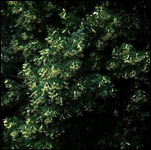
Leaves are round, up to 7 cm long and of similar width, heart-shaped at the base, pointed at the top, with a serrated edge, hairless. Flowers are 2 cm in diameter, 5-petaled, gathered in pendant inflorescences. Fruits up to 6 mm, spherical, woody nuts. Commonly planted in villages and towns as a roadside tree. This linden can be shaped. In cities, it suffers from pollution.
Polish name: Small-leaved linden
Latin name: Tilia cordata
Family: Tiliaceae - lindens
Origin: Europe, Western Asia
Flowering period: June - July
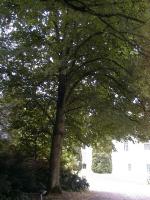
A tree up to 25-30 m high with a clearly marked leader extending to the top and a regular narrow conical crown. Shoots and other parts covered with stellate hairs. Leaves rounded, up to 10 cm in diameter, serrated at the edges, dark green on top, grayish underneath. Flowers grouped in clusters of 5.
Polish name: Silver linden, Warsaw variety
Latin name: Tilia tomentosa 'Varsaviensis'
Family: Tiliaceae - linden family
Origin: hybrid of T. platyhyllos and T. tomentosa
Flowering period: late June - early July
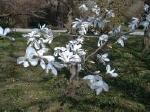
A tall shrub or low tree up to 10 m high. Shoots are thin and bare, resinous scented, buds silky hairy. Leaves are obovate, 5 to 15 cm long, shortly pointed. Flowers white, lightly scented, with widely spread 6 petals. It blooms abundantly every two years. Fruits: follicles - and inside them very decorative seeds covered with a red aril, hanging on white threads. This magnolia is the most frost-resistant among the cultivated magnolia species grown here. The shrub can be propagated from seeds.
Polish name: Japanese magnolia
Latin name: Magnolia kobus DC.
Family: Magnoliaceae - magnolia family
Origin: Japan, Korea
Flowering period: April - May
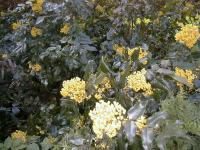
An evergreen shrub usually up to 1 m tall. Leaves are pinnately compound with 5-9 stiff and shiny leaflets with spiny teeth on the edges. Yellow flowers appear at the tips of last year's shoots in upright densely clustered racemes (5-8 cm long). The fruits are elliptical about 8 mm long, light blue due to a waxy coating, darkening, with red juice. The shrub is very decorative due to its shiny leaves and yellow flowers, unfortunately sensitive to frost and winter/spring water deficiency in the substrate. Strong sunlight can also damage the leaves. The plant should be placed in locations sheltered from the wind, shaded or semi-shaded. It is a honey plant, and its fruits are edible.
Polish name: Mahonia pospolita
Latin name: Mahonia aquifolium
Family: Berberidaceae - barberry family
Origin: western regions of North America
Flowering period: April - May
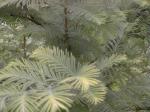
In its native country, it grows on average up to 35 m tall, the oldest specimens in Poland (60 years) have reached 20 m. Needles measuring about 1 cm long x 2 mm wide are soft light green, fall in autumn along with small branches (similarly to the swamp cypress). The round cones from 1 cm to 2.5 cm long hang on side branches, mature in the first year, release seeds, and fall off entirely. Young trees are not frost resistant.
Polish name: Metasequoia chińska
Latin name: Metasequoia glyptostroboides Hu et W.C.Cheng
Family: Taxodiaceae - cypress family
Origin: China - region with a mild climate and high humidity
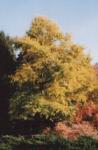
The tree grows up to 40 m tall and 4.5 m in trunk diameter in its native land. In Poland, trees planted in the 19th century grow up to 30 m tall. Leaves are alternate, seasonal, fan-shaped on a long stalk, notched in the middle, with open forked venation - rare among angiosperms. Flowers are dioecious, male in catkins, female with two ovules. Seeds, 2-3 cm in size, look like a yellow spherical plum and emit an unpleasant smell of rotten meat when ripe (October/November). In Krasiczyn Park, only one male specimen grows. The tree is very decorative; in autumn, the foliage turns bright yellow. In older age, the tree is resistant to frost, air pollution, diseases, and pests. Long-lived (up to 2000 years), it tolerates cutting and trimming very well.
Polish name: Ginkgo biloba
Latin name: Ginkgo biloba L.
Family: Ginkgoaceae - ginkgo family
Origin: Eastern China, cultivated since the 11th century also in northern China, Korea, and Japan
Flowering period: May - June
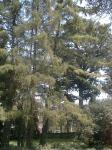
Tree up to 30 - 35 m tall. Crown wide with long spreading branches. Shoots reddish, needles gray-green or bluish. Cones "rose-like" 2-3 cm long and diameter. Trees in Krasiczyn are about 150 years old and have a characteristic broad, "Japanese" shape.
Polish name: Japanese larch
Latin name: Larix kaempferi (Lamb.)
Family: Pinaceae - pine family
Origin: Central and Western Europe
Flowering period: April
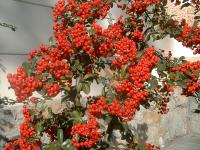
Shrub up to 2(3) m tall. Long shoots with strong lateral thorns. Leaves small (3-4 cm long), narrowly elliptic or obovate, dark green and glossy. In winter they remain dried on the shoots. Flowers white in dense cymes. Fruits very numerous, coral red, remain on the shrub until winter. Shrubs not fully frost resistant, but after freezing and cutting, they regrow.
Polish name: Scarlet firethorn
Latin name: Pyracantha coccinea M.Roem.
Family: Rosaceae
Origin: From the Iberian Peninsula to southwestern Asia
Flowering period: May/June
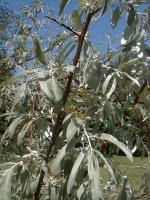
A tall, spreading shrub or tree. Branches often hang down. The bark peels off in longitudinal fibers. Shoots are usually thorny, silvery-white. Leaves are lanceolate, "willow-like" (4-8 cm long) with a blunt or slightly pointed tip, initially white on both sides, later only on the underside. Flowers are silvery on the outside, yellow inside, strongly honey-scented (nectar-producing). Fruits are elliptical drupe-like, edible, dry and mealy, initially silvery, like the whole plant. Interesting color, especially against the background of dark green. Not completely frost-resistant. Tolerates dry, poor soils. Light-loving.
Polish name: Narrow-leaved oleaster
Latin name: Eleagnus angustifolia L.
Family: Eleagnaceae - Oleasters
Origin: South-west Asia
Flowering period: late May - June - early July

The tree reaches 30 meters in height in Poland. The tallest of walnuts. The bark on old trunks is deeply cracked and very dark. Leaves usually pinnately compound with an even number of leaflets (often missing the last leaflet) ranging from 11-23 leaflets. Flowers are inconspicuous, male - catkins, female in upright spikes, wind-pollinated. Fruits are single or in pairs, spherical with a thick covering, strongly scented, the nut shell is densely and deeply sculpted.
Polish name: Black walnut
Latin name: Juglans nigra L.
Family: Juglandaceae - walnut family
Origin: Eastern North America
Flowering period: May
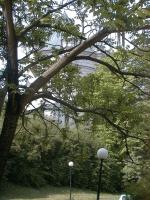
The tree grows up to 25 m tall. The bark is ash-gray, smooth on young trees. The shoots are glandular hairy and often sticky. The leaf is compound, consisting of 11-19 very finely serrated leaflets, softly glandular hairy on both sides, especially underneath. The flowers are in the form of hanging catkins. The fruits, gathered in clusters of several, are elongated, densely hairy, and very sticky. The seed ("nut") is pointed at both ends, with a deeply and sharply sculpted shell. The tree has low decorative value and often sheds leaves by late summer. Amateur grafting of walnut trees on it is possible to obtain low-stemmed walnut trees.
Polish name: Orzech szary
Latin name: Juglans cinerea L.
Family: Juglandaceae - walnut family
Origin: Eastern North America
Flowering period: May
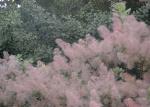
A wide shrub growing up to approx. 4 m in height. It has yellow, decorative wood (used for inlays). Leaves are green, simple, obovate, 5 to 12 cm long, with elongated petioles. Flowers are very small, yellowish, in loose panicles. Very decorative, purple, fluffy fruit clusters.
Polish name: Purple Smoke Tree
Latin name: Cotinus coggygria Scop. 'Purpureus'
Family: Anacardiaceae
Origin: Southern Europe, southwestern Asia, from Pakistan to southern and central China
Flowering period: May - June - July
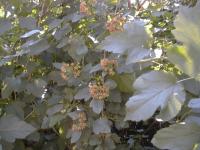
A shrub 2-3 m high and up to 5 m in diameter, with drooping branches. Leaves have 3-5 serrated lobes (up to 7 cm long), variable in size, larger (up to 10 cm long) and wider on strong shoots. Flowers are gathered in convex corymbs at the top of short lateral branches, pale or pale pink, nectar-producing. The fruit is a collective made up of several small inflated pods, mature brown fruit clusters rustle in the wind. The shrub looks attractive as a solitaire on a lawn.
Polish name: Ninebark
Latin name: Physocarpus opulifolius Maxim.
Family: Rosaceae - rose family
Origin: Northern-eastern regions of North America.
Flowering period: May - June
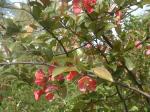
An upright and spreading shrub, usually up to 2 m high here. Shoots are bare or slightly hairy, strongly thorny. Leaves are shiny on top, ovate or oblong, 8-10 cm long, pointed and sharply serrated, bare or only young leaves slightly hairy underneath. Flowers are red, 2-5 cm in diameter, honey-bearing. Fruits are sessile, apple-shaped, hard, yellow, sometimes with a blush, often green - they do not ripen in our climate, they have an aromatic scent, sour taste - can replace lemon for tea, suitable for preserves. A very decorative shrub due to its leathery leaves that fall late in autumn. Tolerates pruning well, suitable for shaped hedges.
Polish name: Chaenomeles speciosa
Latin name: Chaenomeles speciosa Nakai
Family: Rosaceae
Origin: China, Tibetan Plateau, Burma
Flowering period: May
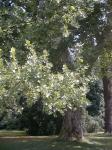
A tree up to 35 m tall, with a spreading crown. Characteristic bark peeling in plates revealing lighter layers (cream, olive). Leaves up to 25 cm in diameter, palmate-lobed, similar to common maple leaves, covered underneath with brown hairs. Flowers inconspicuous, wind-pollinated. Fruits are small nuts, gathered in spherical fruit clusters (2-3 cm diameter) on a long stalk. A long-lived tree, resistant to urban and industrial area conditions. Spreads widely and in older age forms a picturesque crown. Tolerates pruning well.
Polish name: Platanus acerifolia
Latin name: Platanus acerifolia Willd.
Family: Platanaceae
Origin: hybrid originating from western North American and eastern Central-Southern European plane trees
Flowering period: May
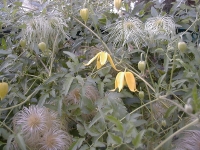
A climber up to 3-4 m high, winding with shoots, leaf stalks, and tendrils. Leaves are pinnate or bipinnate, with narrow, lanceolate, serrated leaflets, partially dissected with 1-2 lobes. Flowers are golden yellow, on long peduncles, bell-shaped; as they fade, the tepals spread wider (up to 8 cm diameter). Blooms abundantly in sunny locations. After flowering, fluffy fruit clusters form where the flowers were. Grows well in poorer soils, resistant to frost and drought.
Polish name: Tangut clematis
Latin name: Clematis tangutica Korsh.
Family: Ranunculaceae - buttercup family
Origin: Central Asia
Flowering period: June - July and again in autumn

A tree growing up to 30 m in height, with a loose crown. Shoots are thin and flexible, almost bare. The trunk bark is dark. Needles come in bundles of 5, 5-12 cm long, very thin, soft and delicate, loosely arranged on the shoot. Cones are elongated and usually curved, 10-15 cm long. The tree is very decorative, frost resistant, fast-growing, but does not tolerate drought. Sensitive to white pine blister rust.
Polish name: Eastern White Pine
Latin name: Pinus strobus L.
Family: Pinaceae - pine family
Origin: Northeastern North America
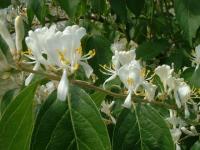
A spherical shrub about 4-5 m tall and wide, with widely spread, long branches. Shoots are hairy. Leaves are ovate-elliptical, 5-8 cm long, with a long tip at the apex, dark green on top, lighter underneath. Flowers about 2 cm long, white, turning yellow as they fade, fragrant, very honey-bearing, pleasantly scented, especially in the evening. Fruits are red and spherical, remaining on the shrubs until November. A very decorative shrub, spherical in shape, leaves remain on the shoots for a long time, falling green in November. Frost resistant.
Polish name: Maack's Honeysuckle
Latin name: Lonicera Maackii Herder
Family: Caprifoliaceae - honeysuckle family
Origin: Far East, from northeastern China and the Korean Peninsula to Japan
Blooming period: late May - June
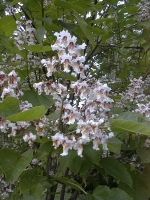
The tree in our climate reaches a height of 15-20 m. It often grows bushy or has a low-set crown. The broadly ovate leaves are 10-25 cm long, shortly pointed at the tip, crushed leaves smell unpleasant, the youngest leaves are brownish. The "orchid-like" flowers, 4-5 cm in diameter, white with purple spots and yellow streaks, are gathered in inflorescences - multi-flowered, upright panicles. The flowers are nectar-producing. Decorative fruits - long, hanging, pod-like capsules. The tree is planted as a solitary specimen. It is not very frost-resistant.
Polish name: Common catalpa
Latin name: Catalpa bignonioides Walter
Family: Bignoniaceae - trumpet creeper family
Origin: Southeastern North America
Flowering period: July
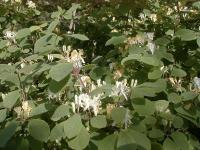
A shrub up to 1-2 m high. Young shoots softly hairy. Leaves broadly elliptical, ovate or inversely ovate up to 6-7 cm long, softly hairy underneath. Flowers white or creamy, often pinkish outside, size 1-1.5 cm. Fruits ripen in July - shiny red-cherry, 1 cm in diameter. Decorative shrub with grey-green coloration and numerous fruits. Suitable for dry sunny and semi-shaded places. Frost resistant.
Polish name: Fly honeysuckle
Latin name: Lonicera xylosteum L.
Family: Caprifoliaceae
Origin: Europe to western Siberia
Flowering period: May
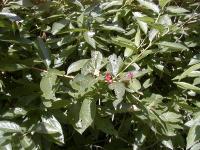
A shrub up to 2-2.5 m in height. Shoots are thick, stiff, and four-angled. Leaves are ovate-elliptical or lanceolate, 5-12 cm long, dark green on the upper surface, lighter and hairy underneath. Flowers are yellow or orange with a radial crown. Fruits are spherical, glossy purplish-black, surrounded by large purple bracts, placed two on a long stalk. The flowers and fruits are very original, but flowering is prolonged over time and therefore not spectacular. Flowers and fruits blend into the green leaves. The shrub is not completely frost-resistant.
Polish name: Lonicera involucrata
Latin name: Lonicera involucrata
Family: Caprifoliaceae - honeysuckle family
Origin: western and northern regions of North America
Flowering period: May - July (up to August)
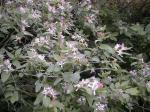
A wide, dense shrub up to 5 m high. The egg-shaped buds protrude perpendicularly from the shoot, all parts are hairless. Leaves are ovate-lanceolate or elliptical, 4-6 cm long, heart-shaped or truncate at the base, bluish underneath. Flowers are pink, 1.5 - 2 cm in size. Fruits are small red ones from the end of June. Very numerous decorative flowers, but they remain on the shoots for a short time. The shrub is undemanding, frost-resistant, drought tolerant, can grow in partial shade, but blooms more abundantly in the sun. The flowers produce nectar.
Polish name: Tatar honeysuckle
Latin name: Lonicera tatarica L.
Family: Caprifoliaceae - honeysuckle family
Origin: central Russia - central Asia
Flowering period: May - June
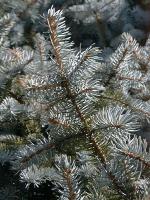
A tree growing up to 30 m in height. Branches and twigs usually arranged horizontally, in regular whorls. Shoots light brown, bare and shiny, deeply grooved. Needles ranging from 1.5 to even 3 cm long, matte, four-sided in cross-section, from gray-green to silvery-blue, very sharp-pointed, arranged around the shoots - "bristly erect". Cones large, 6-10(12) cm long, light brown, hanging. A very decorative tree due to needle color both in the growing season and in winter, valuable for color combinations (see - photo of the castle from the south side).
Polish name: Blue spruce
Latin name: Picea pungens Engelm.
Family: Pinaceae - pine family
Origin: Western USA
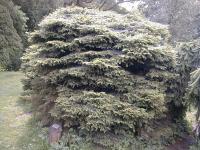
A dwarf variety of spruce, not developing a leader shoot, low, with a shallow depression in the middle. The shrub has a dense, compact, spherical form.
Polish name: Common spruce var. nidiformis
Latin name: Picea abies H.Karst 'Nidiformis'
Family: Pinaceae
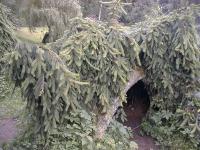
All branches hang to the ground, no guide.
Polish name: Common spruce, inverted variety
Latin name: Picea abies H.Karst 'Inversa'
Family: Pinaceae - pine family
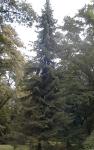
A tree reaching 30 m in height, with a narrow crown. Needles are flattened, quite wide, with two white stripes on the underside and a rounded tip. Cones range from 3 to 6 cm long, ovate-elongated, young ones dark purple, mature ones dark brown. The tree is frost-resistant.
Polish name: Serbian spruce
Latin name: Picea omorica Purk
Family: Pinaceae - pine family
Origin: Tara Mountains in the Balkans
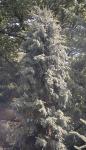
A tree with a narrow crown, branches and small twigs hanging down. Other characteristics as for the type.
Polish name: Serbian spruce pendula variety
Latin name: Picea omorica Purk 'Pendula'
Family: Pinaceae - pine family
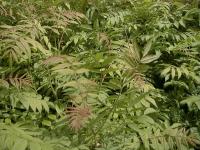
Shrub up to 2 m high giving numerous offshoots, forming dense thickets. Shoots thick and stiff, upright with an orange core. Leaves imparipinnate up to 25 cm long, leaflets (from 13 to 25), pointed, densely doubly serrated. Flowers white about 8 mm in diameter, fluffy, gathered in rich, branched, conical, terminal panicles (up to 30 cm long), honey-bearing. Fruits composed of small pods fused at the base. Decorative shrub due to early leaf development and numerous fluffy inflorescences, provided it grows in the sun. Spreads quickly and easily becomes wild. Soil-protecting shrub.
Polish name: Sorbaria sorbifolia
Latin name: Sorbaria sorbifolia A. Braun
Family: Rosaceae - rose family
Origin: Northern Asia from the Urals to Kamchatka and Japan
Flowering period: June - August
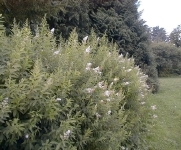
Shrub height up to 1.8 m. Leaves elongated, serrated, bare. White flowers in loose upright panicles.
Polish name: White Spirea
Latin name: Spirea alba
Family: Rosaceae
Origin: North America
Flowering period: end of June - beginning of September
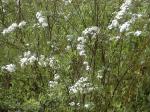
Shrub up to 1-2 m high. Leaves bare, lanceolate, green, 2-2.5 cm long, serrated. Small white flowers gathered in umbel-like inflorescences. Not very decorative in shady places due to poor flowering.
Polish name: Small spirea
Latin name: Spirea arguta
Family: Rosaceae - rose family
Origin: hybrid
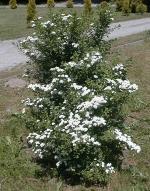
Shrub up to 1.5 m tall. Shoots are red. Leaves narrowly obovate, 2.5-3.5 cm long, entire, glabrous, dark green on top, bluish-green underneath, they remain on the shrub for a long time in autumn. Flowers white, small, gathered in dense hemispherical corymbs. Blooms abundantly if grown in the sun. Very nice shrub.
Polish name: Japanese spirea 'Snowmound'
Latin name: Spirea nipponica 'Snowmound'
Family: Rosaceae - rose family
Origin: Japan
Flowering period: June
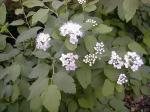
A shrub reaching about 1.5 m in height. Stems are angular and bent, bare, buds large, pointed and bent away from the branches. Leaves are bright green, ovate or elongated ovate (up to 4-8 cm long), entire at the base, above singly and doubly sharply serrated, more or less hairy underneath. Flowers are creamy white, in corymbose panicles at the top of short lateral shoots, stamens numerous, clearly longer than the petals of the corolla, hence the effect of fluffy inflorescences. The shrub is undemanding, frost-resistant, shade-tolerant. Easily becomes wild, forming thickets due to underground runners.
Polish name: Spiraea chamaedryfolia
Latin name: Spiraea chamaedryfolia L.
Family: Rosaceae
Origin: SE Europe, NE Asia, Siberia
Flowering period: May and often July - August
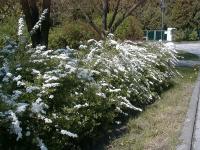
A dense shrub up to 1.5 m high. Thin, hanging, felt-like hairy shoots. Leaves narrow-lanceolate, 2-2.5 cm long, densely hairy, gray-green. White flowers gathered in corymbs along the entire length of last year's long shoots. Light-loving shrub, abundantly flowering, during flowering completely covered with flowers with garland-like branches - very decorative. Frost and drought resistant. Perfectly serves as an untrimmed hedge.
Polish name: Gray Spirea 'Grafsheim'
Latin name: Spirea cinerea 'Grafsheim'
Family: Rosaceae - rose family
Origin: hybrid
Flowering period: late April - early May
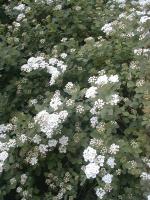
A beautiful, sprawling shrub, wide and dense, with drooping branches reaching up to 2 m in height. The leaves are rhomboid-ovate (2-4 cm long), slightly lobed and toothed, smooth, dark green on top, bluish underneath. White flowers in flat corymbs. An extraordinary decorative effect during flowering, especially on slopes – cascades of small white flowers. Nice autumn coloration. The shrub is frost-resistant. It can be planted in partial shade, but blooms more abundantly in the sun.
Polish name: Van Houtte Spirea
Latin name: Spirea x vanhouttei
Family: Rosaceae - rose family
Origin: hybrid
Flowering period: mid-May - mid-June
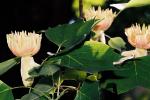
A tall tree with a wide crown. Buds spatulate-flattened, covered with 2 fused stipular scales. Leaves on long petioles, 4-lobed, lobes pointed, leaf (up to 20 cm long) notched at the apex. Flowers (4-5 cm in size) tulip-like, yellow-green with an orange spot on the inner petals (9 - 3 in whorls), numerous stamens and pistils arranged spirally on an elongated flower base. Fruits: 1- or 2-seeded winged nuts, 80-100 in erect, cone-like fruit clusters (up to 10 cm long). They usually break apart on the trees. Tulip tree fruits rarely mature in Poland, however, a specimen in Krasiczyn during an exceptionally early and warm summer scattered seeds from which seedlings grew - sensitive to frost. Older trees - frost resistant. Tulip trees are mainly planted as solitaires to showcase the bright color of the leaves and the tree’s habit. Autumn coloration - golden yellow.
Polish name: Tulip tree (Liriodendron tulipifera)
Latin name: Liriodendron tulipifera L.
Family: Magnoliaceae - magnolia family
Origin: Eastern regions of the USA
Flowering period: June - July
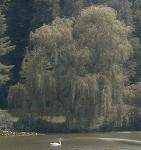
The crown is wide, shoots are thin, flexible, hanging down to the ground, yellow. Leaves are narrow-lanceolate, densely, finely serrated, petiole up to approx. 0.5 cm long. Male flowers in "catkin-like" inflorescences predominate - yellow (a large number of yellow stamens). Full color effect during flowering. The tree occupies a lot of space, most suitable for planting near water.
Polish name: Weeping willow (former w. white var. weeping)
Latin name: Salix x sepulcralis Simonk. 'Chrysocoma'
Family: Salicaceae - willows
Flowering period: April - May
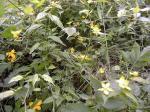
A shrub forming thickets up to 1.5 m high. It spreads through underground runners. Stems numerous, upright and thin, bright green, 3-year-old shoots die off. Leaves narrowly ovate, long-pointed at the tip, 6-10 cm long, sharply doubly serrated, hairy underneath, light green. Yellow radiate flowers 2-3.5 cm in diameter appear singly at the ends of lateral short shoots. An ornamental shrub all year round, decorative in winter because of its green shoots, in summer because of its flowers. It should be planted in a sunny or semi-shaded place (then it blooms worse). Not very frost resistant.
Polish name: Chinese Kerria
Latin name: Kerria japonica DC.
Family: Rosaceae
Origin: central and western China, cultivated for centuries in Japan
Flowering period: May - June, blooms again in September
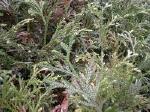
An evergreen shrub (a tree in its native land). The scales are decussate, with claw-like curved tips, blunt at the top, convex on top, dark green and strongly shiny, concave underneath, with large, distinct, chalky white spots. A very pretty shrub, slow growing, but sensitive to frost, it should be planted in sheltered places. It can be propagated by shoot cuttings.
Polish name: Japanese Arborvitae
Latin name: Thujopsis dolabrata Siebold et Zucc.
Family: Cupressaceae - cypress family
Origin: Mountains of Japan
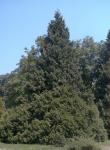
The highest quality of arborvitae, up to 60 m tall in its native country, up to 35 m in Poland, with the trunks of older trees characteristically widened at the base. Broad, attractive growth habit. The lower branches take root, forming a wreath of young trees around the trunk. Dense and compact branches, small twigs drooping, dark green, shiny scale-like leaves with a coating underneath. Small cones, ovate or elongated with 4-6 pairs of scales. A moderately frost-resistant species. Grows better in humid air conditions.
Polish name: Giant arborvitae
Latin name: Thuja plicata Donn ex D.Don
Family: Cupressaceae - cypress family
Origin: Western North America
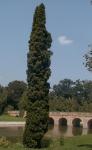
Narrow-conical shape, strong growth, height up to 10, even 15 m. Densely arranged branches. Scales light green, shiny, only slightly discolored in winter.
Polish name: Western thuja, columnar variety
Latin name: Thuja occidentalis L. 'Fastigiata'
Family: Cupressaceae - cypress family
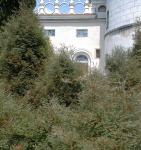
A bushy variety with a delicate, fluffy structure, with thin branches. The specimen in Krasiczyn is widely spread, having developed several leaders up to 3 m high. It does not have a regular shape. On the branches, there are only soft and delicate needles (6-8 mm long), matte green, gray, but without a waxy coating; in autumn they turn brown. It does not produce cones. It easily deforms under the weight of snow.
Polish name: Western arborvitae, heather form
Latin name: Thuja occidentalis L. 'Ericoides'
Family: Cupressaceae - cypress family